

After years of planning, the Central Council of the Tlingit and Haida Indian Tribes of Alaska soft-opened a casino on Douglas Island this week. It’s Juneau’s first casino.
Amber Forrester sat at the end of a long row of electric slot machines, pressing a bright white spin button on Wednesday afternoon.
She was at Tlingit and Haida’s new Two Coppers Casino on Fish Creek Road. It’s the first and only casino of its kind in Juneau, and one of very few operating in the state. Forrester is a tribal citizen who casually games when she visits the Lower 48. She said it’s about time Tlingit and Haida cashes in on the economic benefits gaming can bring to communities.
“Other casinos and tribes have proven the economic benefit of being able to have gaming and be able to take that funding and put it into schools, community service, helping our elders,” Forrester said.
According toU.S. Census data, after Congress passed the Indian Gaming Regulatory Act in 1988, economic conditions for Indigenous people on reservations improved significantly in the following decades. Under theIndian Gaming Regulatory Act, tribe-owned casino revenue is required to support tribal economic development and welfare.
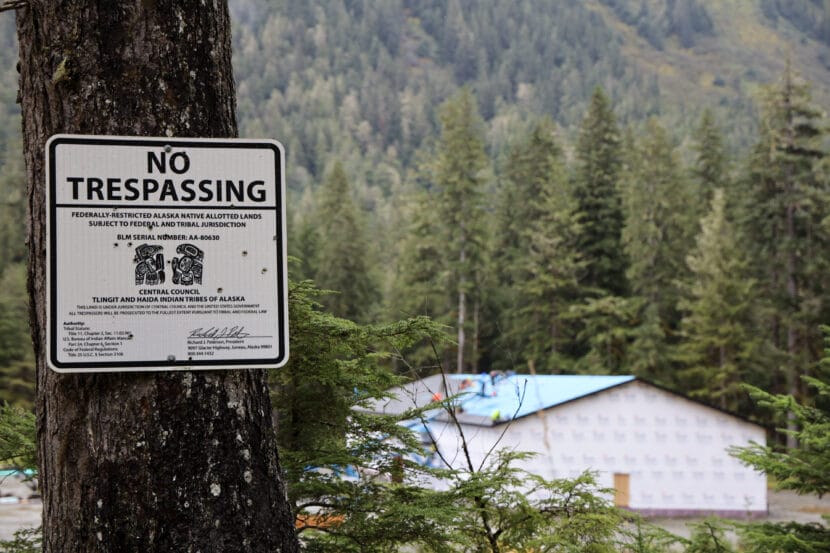
However, very few tribes in Alaska have authority over land, so they haven’t had a way to open reservation-style casinos like tribes in the Lower 48. Many, like Tlingit and Haida, have sought to assert authority over Native allotments — like this one — owned by individual tribal citizens.
“They’ve already proven that it works, and we’re really kind of late in all of that, because this has been going on for decades, and now for our tribe to finally be able to take advantage of the opportunity is tremendous. It’s really important,” Forrester said.
Loud pop music and rows of 100 bright neon electric slot machines invite patrons into the building. The casino offers Class II gaming, which covers things like pull tabs, bingo and slot-style electronicmachines.It doesn’t cover games like poker or blackjack, and it doesn’t serve alcohol.
“We’re really excited about this,” said Chalyee Éesh Richard Peterson, Tlingit and Haida’s president.
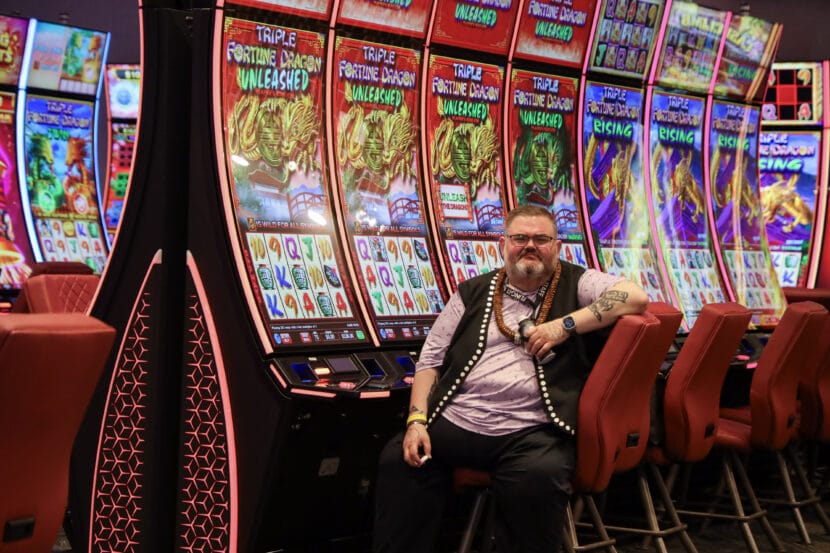
Sitting at one of the many slot machines on Wednesday afternoon, he said the opening of the casino signifies a major step toward economic self-sufficiency and sovereignty for the tribe.
“It’s an opportunity, you know, an expression of our sovereignty, but also I think it’s a great economic opportunity for not only the tribe, but for people who want to work here,” he said.
The casino is located not far from Eaglecrest Ski Area on Douglas. It’s just a small piece of a Native allotment owned by tribal citizens who lease it to Tlingit and Haida.
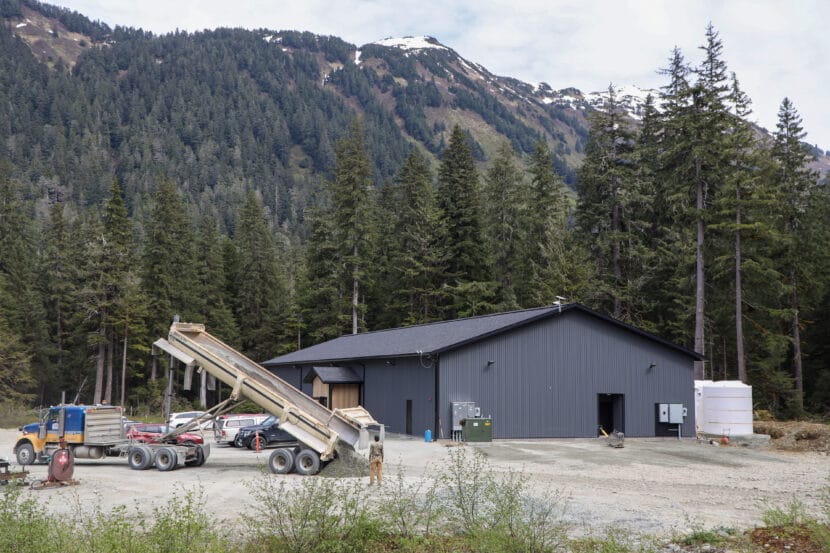
Rumors of the tribe developing something on that property have been talked about for years. Last August,the tribe confirmed with local mediathat it was building the casino, but did not share an opening date at the time.
Shortly after, however, in September, the U.S. Department of the Interiorwithdrew a legal opinionthat gave Tlingit and Haida — and other tribes in Alaska — legal jurisdiction over Alaska Native allotments.
At the time, it was thoughtthe change would put the casino in jeopardy.The withdrawal marked a return to decades of precedent. Federal and state officials in Alaska have long said that land allotments given to individual tribal members in Alaska were not considered “Indian Country.” Therefore, they are not under tribal jurisdiction and cannot be home to federally regulated gaming halls.
However, according to Peterson, that isn’t the case.
“The legality is on our side,” he said.
He said Tlingit and Haida‘s lawyers reviewed the legal opinion and believe it does not impact the tribe’s ability to open and operate.
“We have jurisdiction here. It’s a family allotment, we worked through (U.S. Department of the) Interior and NIGC — that’s never changed. So, we’re not doing anything illegal,” he said.
But whether that holds true remains to be seen. According to thewithdrawal memoreleased in September, Tlingit and Haida’s approval for gaming needs to be reevaluated in accordance with the revocation. But as of now, the National Indian GamingCommission hasn’t done so.
Other tribes in Alaska, like the Native Village of Eklutna, are similarly operating casinos on Native allotments in a state of legal limbo. Eklutna is in the midst of an ongoing lawsuit with the State of Alaska, whichfiled a lawsuit toshut down the casino last year, arguing the state maintains primary jurisdiction over Native allotments. Despite that, Eklutna continues to operate and isexpanding its operations.
Peterson said while he hopes the state doesn’t sue Tlingit and Haida, he’s not counting on it. The Alaska Department of Law did not immediately respond to KTOO’s question asking the state’s position on the casino’s opening.
“There’s nothing without risk. You can do anything, and somebody may challenge you,” he said. “The state of Alaska, unfortunately, their track record is suing tribes. Their track record is also not winning.”
Peterson said, despite the legal challenges that may be on the horizon, he’s excited. He said the casino scratches the surface of what he envisions for the property.
“I would love to see us do a nice small hotel, and kind of like a day spa situation,” he said. “Maybe you want to bring your partner up and have a nice weekend, you know, get pampered a little bit — those kinds of things.”
He said the tribe plans to feed off the large number of cruise ship passengers and crew that visit Juneau, along with residents and independent travelers, to generate revenue at the casino and reinvest it in essential tribal programs and services.
The casino is still in a “soft-open” phase and there’s still more work to be done at the site — like getting running water and paving the large dirt parking lot. Peterson said the tribe plans to officially open its doors on July 1.
Copyright 2026 KTOO